
What smart waste management systems improve first





For business evaluators, the first question is not whether smart waste management systems are innovative, but what they improve first in real operations.
In most facilities and city environments, the earliest gains are visible, measurable, and financially relevant.
Overflow drops, collection routes become more efficient, labor hours are reassigned, and public hygiene becomes easier to maintain.
That is why smart waste management systems matter across the broader environmental services landscape.
They connect bins, vehicles, sensors, compactors, and software into one practical operating layer.
For organizations tracking ESG performance, sanitation quality, or urban service costs, the first improvements often define the long-term business case.
What smart waste management systems mean in practical terms
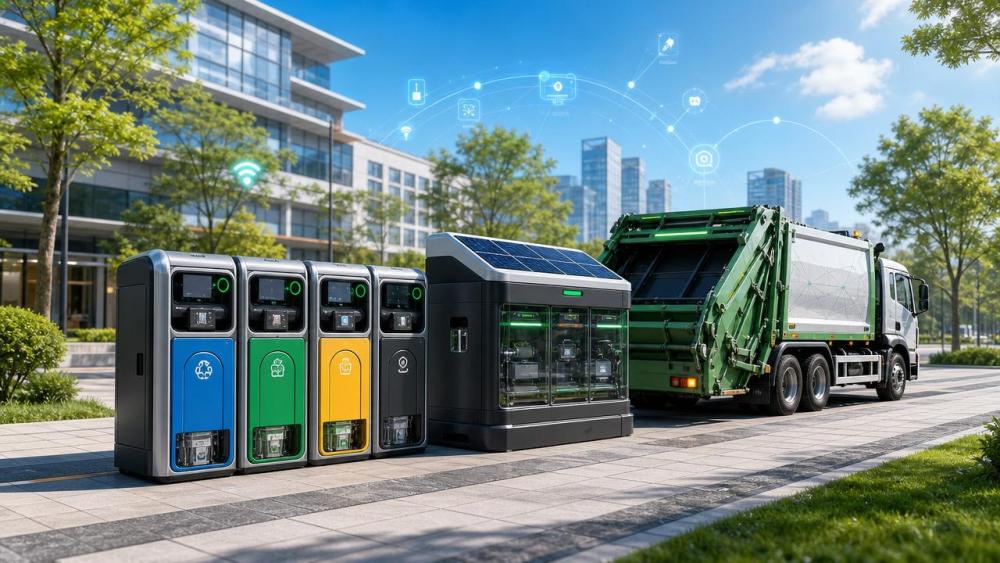
Smart waste management systems combine physical waste assets with digital monitoring and automated decision support.
Typical components include fill-level sensors, solar compacting bins, AI-assisted sorting stations, GPS-connected vehicles, and reporting dashboards.
Some systems also integrate with sanitation trucks, autonomous cleaning equipment, and smart property management platforms.
The goal is simple.
Waste should be collected at the right time, by the right vehicle, through the right route, with minimal overflow and minimal waste of labor.
In commercial hubs, airports, streets, campuses, and mixed-use properties, this shift turns waste handling from a reactive task into a managed process.
That practical shift is what makes smart waste management systems relevant beyond technology headlines.
The first operational improvements usually appear in five areas
The earliest benefits of smart waste management systems are rarely abstract.
They usually appear in day-to-day service stability and visible cleanliness.
- Overflow prevention through live fill-level monitoring.
- Lower collection frequency for half-empty bins.
- Better labor allocation across routes and shifts.
- Cleaner public areas with fewer odor and litter complaints.
- More reliable reporting for compliance, budgeting, and ESG disclosure.
These are often the first improvements because they do not require perfect AI maturity.
They depend on visibility, timing, and operational discipline.
In other words, smart waste management systems improve information quality before they transform everything else.
1. Overflow control improves first
Overflow is the most immediate problem in conventional waste collection.
It damages public perception, increases pest risks, and creates extra cleanup work around bins.
Smart waste management systems address this first by showing which bins are near capacity.
Solar compacting stations add another early advantage.
They increase effective capacity and reduce the chance of surface-level overflow in busy areas.
2. Route efficiency follows quickly
Many waste routes are still based on fixed schedules rather than actual demand.
That means vehicles visit underused bins while high-volume points may still overflow early.
Smart waste management systems reduce this mismatch.
Vehicles can be dispatched according to need, location density, and time window.
This becomes especially valuable for municipal fleets, property groups, and airport estates.
3. Labor efficiency becomes measurable
Labor savings do not always mean workforce reduction.
Often, the first gain is redeployment.
Teams spend less time checking empty or half-full bins and more time handling sanitation tasks that require human judgment.
That is a practical early win for smart waste management systems in labor-constrained environments.
Why the broader sanitation industry is paying close attention
Smart waste management systems do not stand alone.
They now sit within a wider sanitation technology stack that includes electric collection vehicles, smart restrooms, autonomous scrubbers, and AI-enabled property systems.
This alignment matters because waste, cleaning, water use, and public hygiene increasingly share the same data expectations.
Within this environment, smart waste management systems are often one of the most visible first steps toward data-driven sanitation operations.
Business value beyond the first visible gains
The first improvements attract attention, but longer-term value is even more important.
Once organizations trust the data, smart waste management systems begin supporting budgeting, asset planning, and service benchmarking.
That creates several layers of business value.
- Fewer unnecessary pickups reduce fuel, energy, and vehicle wear.
- Collection histories reveal true demand by zone, season, and event profile.
- Sorting data supports circular economy planning and contamination control.
- Service records strengthen contractor oversight and internal accountability.
For mixed-use developments or transport hubs, these insights can also be matched with footfall patterns.
That helps explain why certain areas fail faster and which bin formats perform best.
As a result, smart waste management systems become planning tools, not just monitoring tools.
Typical application scenarios across public and commercial environments
Different sites experience different first benefits.
The table below shows where smart waste management systems usually deliver early value.
These scenarios show that smart waste management systems improve first where variability is high and manual checking is costly.
Implementation guidance and common caution points
Successful deployment depends less on hype and more on fit.
Before scaling smart waste management systems, several checks are worth making.
- Define the first target clearly, such as overflow reduction or route savings.
- Start with high-traffic zones where service pain is already visible.
- Confirm sensor reliability, battery life, and network coverage.
- Check compatibility with existing sanitation vehicles and reporting systems.
- Review data governance, maintenance support, and contamination handling rules.
A common mistake is trying to solve recycling purity, labor optimization, and fleet electrification all at once.
A phased rollout usually performs better.
It allows teams to prove early value, adjust routes, and refine service thresholds.
That approach makes smart waste management systems easier to justify financially and operationally.
A practical next step for evaluating operational fit
The best way to assess smart waste management systems is to focus on one measurable pain point first.
Select a zone with frequent overflow, irregular pickup demand, or heavy labor spent on manual checking.
Then compare current service patterns with sensor-led collection over a defined period.
Track overflow incidents, pickup counts, route time, labor hours, and cleanliness complaints.
This method shows what smart waste management systems improve first in your actual operating context.
In most cases, the earliest answer is not futuristic autonomy.
It is better timing, better visibility, and better control.
Those improvements are often enough to build a credible case for broader sanitation modernization.
Related News
- 00
0000-00
Michigan Offers Over $4 Million in Grants for Electric Garbage Truck Purchases - 00
0000-00
High-Pressure Pumps for Sewer Jetting: Matching Flow and Pressure to Pipe Size - 00
0000-00
Smart Waste Stations for Airports: Assessing Sorting Accuracy and Throughput - 00
0000-00
Changi Airport Reorders Cleaning Robots as Chinese Maker Reaches 40-Plus Markets
Weekly Insights
Stay ahead with our curated technology reports delivered every Monday.
Related Recommendations
Explore Industrial SW designed for smart manufacturing and automation. Improve efficiency, streamline operations, and support digital transformation.