
EU REACH Adds 4 Phthalates Restrictions for Underground Waste System Seals





On 22 May 2026, the European Union updated the REACH Annex XVII restriction list, imposing new concentration limits (<0.1% by weight) on four phthalate plasticizers in rubber sealing components used in underground waste systems. This regulatory change directly affects material selection, SVHC declaration obligations, and pre-export compliance verification across the entire supply chain.
Regulatory Update Confirmed
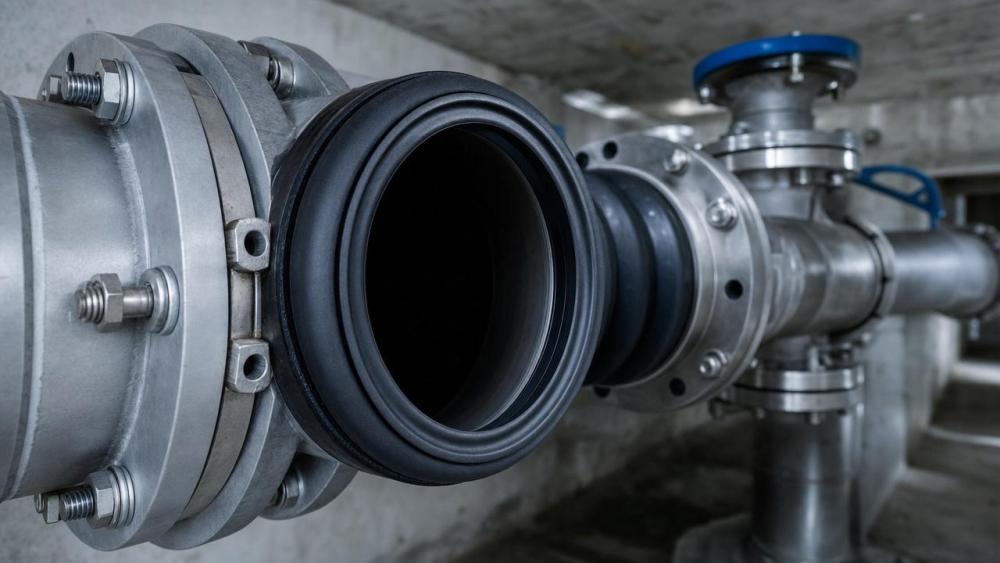
The European Commission formally amended Annex XVII of Regulation (EC) No 1907/2006 (REACH) on 22 May 2026. The revision introduces binding restrictions on diisobutyl phthalate (DIBP), di-n-pentyl phthalate (DPENP), di-n-hexyl phthalate (DHEXP), and di(2-ethylhexyl) phthalate (DEHP) when present in elastomeric seals—specifically those integrated into pumps, valves, and connection interfaces of underground waste systems. Compliance is mandatory for all articles placed on the EU market after the entry-into-force date of the amendment.
Supply Chain Impact by Role
Exporters and Direct Trading Companies
These entities face immediate shipment delays unless updated declarations of conformity, substance composition data, and updated safety data sheets (SDS) are submitted prior to customs clearance. Non-compliant shipments risk rejection or forced reprocessing under Article 71 enforcement procedures.
Raw Material Procurement Firms
Procurement teams must now verify supplier declarations against the revised Annex XVII thresholds—not only for finished seals but also for masterbatch compounds, recycled rubber feedstocks, and polymer blends. Traceability documentation must extend to Tier 2 and Tier 3 suppliers.
Component Manufacturers
Manufacturers of pump housings, valve bodies, and modular interface units must reassess all elastomer-sourced subcomponents—including O-rings, gaskets, and compression seals—for phthalate content. Design validation reports and material certificates must reflect testing per EN 14372 or ISO 16179 protocols.
Supply Chain Verification Services
Third-party compliance auditors and testing laboratories are seeing increased demand for targeted phthalate screening in rubber matrices, especially for low-volume, high-complexity parts where formulation history is incomplete. Gap assessments now routinely include review of legacy material specifications issued before Q2 2026.
Key Compliance Actions for Enterprises
Full-Supply-Chain Substance Review
Companies must conduct a complete upstream audit—from raw polymer suppliers through compounders and seal fabricators—to confirm phthalate concentrations remain below 0.1% w/w. This includes reviewing historical purchase orders, technical datasheets, and lab reports dating back at least three years.
SVHC Declaration & Technical Documentation Upgrade
Revised SVHC declarations must explicitly address the four newly restricted phthalates—even if previously reported as ‘not present’. All technical files supporting CE marking or EU Declaration of Conformity must be updated with test reports from accredited labs (e.g., ISO/IEC 17025-certified).
Procurement & Specification Alignment
Purchasing departments must revise material specifications and tender documents to prohibit use of the four phthalates in elastomeric sealing elements. New contracts should require suppliers to provide annual analytical verification and notify immediately upon any formulation change affecting plasticizer content.
Export Readiness Timeline Adjustment
Lead times for export-bound orders must now include an additional 10–14 business days for compliance verification, third-party testing, and documentation finalization—particularly for custom-engineered seals where material requalification is required.
Industry Perspective: Beyond Compliance, Toward Material Resilience
Analysis shows this amendment signals a broader shift toward functional-material regulation—not just end-product conformity. Observably, downstream specifiers (e.g., municipal infrastructure procurers and engineering contractors) are beginning to reference Annex XVII updates directly in tender requirements, effectively cascading compliance obligations earlier into the design phase. It is more appropriate to understand this as a structural tightening of chemical accountability across mechanical system integration—not merely a labeling or reporting update. What deserves closer attention is how rapidly alternative plasticizers (e.g., DOTP, DINCH, or polymeric non-phthalates) gain adoption across mid-tier seal manufacturers, given their differing processing behavior and long-term aging performance in buried wastewater environments.
Strategic Implication for Infrastructure Suppliers
This regulatory update reinforces that chemical compliance is no longer a standalone certification task—it is embedded in product architecture, procurement governance, and technical documentation integrity. For manufacturers serving EU underground waste infrastructure markets, proactive substitution planning, cross-tier material transparency, and harmonized test protocols represent the emerging baseline—not optional enhancements. Continued competitiveness hinges less on meeting a single threshold and more on building verifiable, auditable material traceability systems.
Source Information and Monitoring Guidance
This article is generated exclusively from the provided title, event date (22 May 2026), and summary statement. Specific official source links were not provided in the input and should be verified continuously. Stakeholders are advised to monitor upcoming ECHA guidance documents on enforcement interpretation, national market surveillance priorities, tender clause adaptations by EU public authorities, and industry feedback on analytical method harmonization for complex rubber matrices.
Related News
- 00
0000-00
Michigan Offers Over $4 Million in Grants for Electric Garbage Truck Purchases - 00
0000-00
High-Pressure Pumps for Sewer Jetting: Matching Flow and Pressure to Pipe Size - 00
0000-00
Smart Waste Stations for Airports: Assessing Sorting Accuracy and Throughput - 00
0000-00
Changi Airport Reorders Cleaning Robots as Chinese Maker Reaches 40-Plus Markets
Weekly Insights
Stay ahead with our curated technology reports delivered every Monday.
Related Recommendations
Explore Industrial SW designed for smart manufacturing and automation. Improve efficiency, streamline operations, and support digital transformation.