
Morocco Extends Safeguard Measures on Hot-Rolled Steel, Impacting环卫 Vehicle Chassis Supply





Morocco extended safeguard measures on imported hot-rolled steel for an additional 12 months effective 24 May 2026 — a move directly affecting the supply chain for high-strength chassis materials used in electric street sweepers (EV Street Sweepers) and rear-loader garbage trucks (Rear Loader Garbage Trucks).
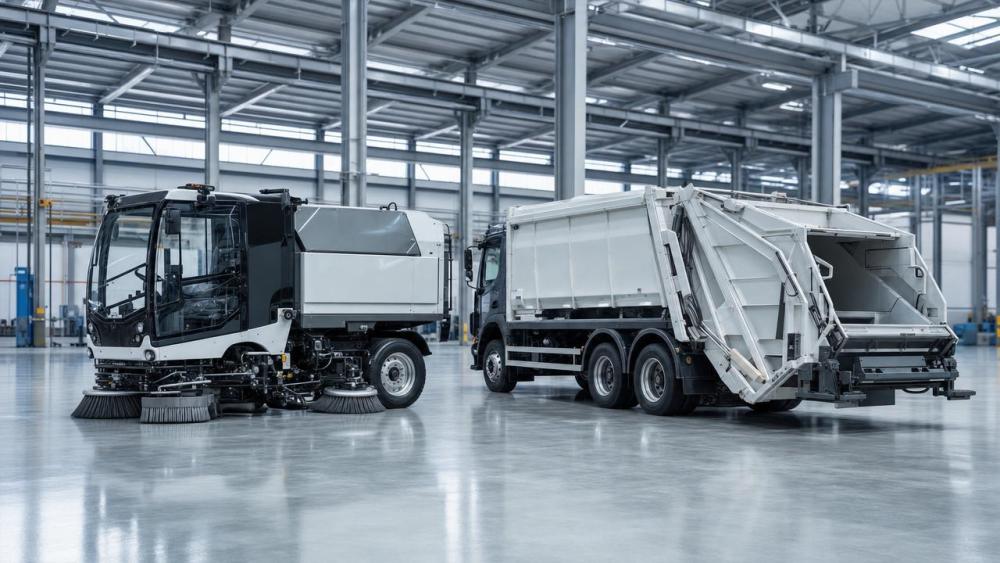
Morocco’s Safeguard Extension Confirmed
On 24 May 2026, Moroccan authorities announced the 12-month extension of existing safeguard measures on hot-rolled steel imports. The measure applies to grades and specifications critical for structural chassis components in municipal sanitation vehicles, including EV Street Sweepers and Rear Loader Garbage Trucks. Chinese exporters supplying such vehicles or their subsystems are advised to secure long-term steel procurement agreements with mills or evaluate alternative alloy solutions.
Supply Chain Impact Across Key Stakeholders
Direct Exporters
Exporters of complete sanitation vehicles face delayed cost modeling and margin pressure due to potential price volatility and quota uncertainty under the extended safeguards. Customs clearance timelines may lengthen if new documentation or origin verification is introduced during implementation.
Raw Material Procurement Firms
Firms sourcing hot-rolled steel for downstream fabrication must reassess lead times and contractual flexibility. The extension increases reliance on pre-negotiated allocations or certified alternative chemistries meeting mechanical property requirements (e.g., yield strength ≥ 550 MPa, impact toughness at −20 °C).
Vehicle Component Manufacturers
Manufacturers fabricating chassis frames or sub-assemblies may need to revalidate material certifications, welding procedures, and fatigue test reports if substituting alloys — especially where compliance with EN 10025-2 or ASTM A572 Grade 50 is contractually mandated.
Supply Chain Logistics Providers
Logistics and customs brokerage services supporting vehicle exports must monitor updates to Morocco’s tariff classification codes (e.g., HS 7208) and verify whether updated import licenses or conformity assessment records (e.g., CNMA certification) will be required for steel-integrated chassis shipments.
Key Actions for Export-Oriented Enterprises
Secure Long-Term Steel Sourcing Agreements
Given the 12-month extension, Chinese manufacturers should finalize multi-month rolling contracts with domestic or third-country mills — prioritizing those offering mill test reports traceable to ISO/IEC 17025-accredited labs and consistent with EN 10204 3.1 declarations.
Evaluate Technical Substitution Pathways
Where feasible, assess dual-material qualification strategies — e.g., validating thermomechanically rolled HSLA steels compliant with EN 10149-2 or ASTM A1011, ensuring equivalent tensile properties and weldability without compromising chassis stiffness or crashworthiness.
Align Export Documentation with Updated Requirements
Review pending and upcoming tenders for Moroccan municipal fleets: confirm whether tender specifications now reference updated national standards (e.g., NM 00.001 or NM 00.002), require additional conformity marks, or impose stricter origin-of-material disclosure clauses.
Industry Perspective: Beyond Short-Term Procurement Adjustments
Analysis shows this extension reflects a broader regional shift toward strategic material control in infrastructure-adjacent sectors — not merely a trade defense action. From an industry perspective, it signals increasing emphasis on localized input resilience for municipal fleet electrification programs. What deserves closer attention is how rapidly alternative alloy adoption can scale without triggering secondary certification delays across vehicle type-approval processes (e.g., UN ECE R137 or national homologation). It is more appropriate to understand this as a catalyst for upstream technical coordination between steel producers and vehicle OEMs — rather than solely a tariff-related hurdle.
Taking Stock: Policy Continuity Meets Operational Agility
This measure underscores that trade policy stability no longer implies static conditions — but rather demands proactive, cross-functional readiness across procurement, engineering, and regulatory affairs teams. Its significance lies less in immediate disruption and more in reinforcing the growing interdependence between raw material governance and final-product market access — particularly in fast-evolving green municipal mobility segments.
Source Attribution & Ongoing Monitoring
This article is based exclusively on the title, event date (24 May 2026), and summary provided by the user. Specific official source links were not provided in the input and should be verified continuously. Stakeholders are advised to monitor further announcements from Morocco’s Ministry of Industry and Trade, the National Office for Consumer Protection (ONPC), and updates to the Official Bulletin of the Kingdom (Bulletin Officiel du Royaume). Continued observation is warranted regarding implementing decrees, customs enforcement guidance, tender specification revisions, and sectoral feedback from Moroccan municipal authorities.
Related News
- 00
0000-00
Michigan Offers Over $4 Million in Grants for Electric Garbage Truck Purchases - 00
0000-00
High-Pressure Pumps for Sewer Jetting: Matching Flow and Pressure to Pipe Size - 00
0000-00
Smart Waste Stations for Airports: Assessing Sorting Accuracy and Throughput - 00
0000-00
Changi Airport Reorders Cleaning Robots as Chinese Maker Reaches 40-Plus Markets
Weekly Insights
Stay ahead with our curated technology reports delivered every Monday.
Related Recommendations
Explore Industrial SW designed for smart manufacturing and automation. Improve efficiency, streamline operations, and support digital transformation.