
QYResearch: Commercial Cleaning Robots Face Higher Buyer Thresholds





The timing of the underlying market shift is not clearly specified in the source input, but the latest QYResearch report release on June 9, 2026 signals an important change in how commercial cleaning robots are being assessed in procurement and delivery processes. Rather than being only a growth story, this update points to stricter buyer-side requirements around navigation reliability, multi-robot coordination, and localized after-sales support, which may affect manufacturers, exporters, distributors, procurement teams, certification-related service providers, and after-sales operators.
What the report explicitly confirms
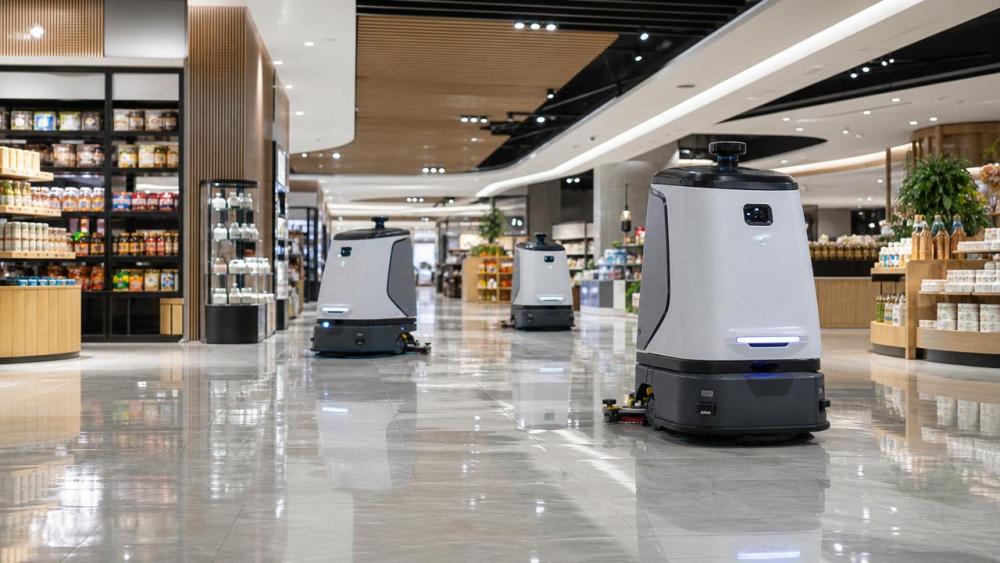
QYResearch released its Global Commercial Cleaning Robot Market Report 2026–2032 on June 9, 2026. According to the report, the global commercial cleaning robot market is projected to reach US$1.21 billion by 2032, with a compound annual growth rate of 10.5%.
The report identifies shopping malls and supermarkets as the largest application segment, accounting for 30.1% of demand. It also states that water-cleaning products hold the leading product share at 65.8%.
In addition, the report highlights that procurement buyers in Europe and the United States are treating autonomous navigation stability, multi-machine collaborative scheduling capability, and localized after-sales responsiveness as core evaluation criteria.
Why procurement rules are becoming more operational
Technical suppliers may face tighter bid alignment
Analysis shows that for manufacturers and exporters of commercial cleaning robots, the reported buyer focus is not just a product preference issue. It may increasingly shape technical bid alignment, specification review, and pre-delivery documentation. Where buyers emphasize navigation stability and fleet coordination, suppliers may need to present clearer technical descriptions, testing records, operating performance materials, and service response commitments during procurement discussions.
Channel and delivery partners may see stronger service obligations
From an industry perspective, distributors, local channel partners, and delivery-side service providers may be affected because localized after-sales response is now described as a core buyer criterion. This can influence how vendor qualifications are reviewed, how service coverage is assessed, and how delivery readiness is judged in practical procurement decisions. What deserves closer attention is whether buyers begin to reflect these expectations more explicitly in tender documents, service clauses, or supplier onboarding materials.
Procurement teams may adjust evaluation weightings
Observably, buyers in retail-oriented commercial settings such as malls and supermarkets may place greater weight on operational continuity, coordination efficiency, and service responsiveness when comparing suppliers. Because this application segment accounts for 30.1% in the report, procurement teams may increasingly treat performance consistency and support capability as practical compliance-related checkpoints in selection and acceptance stages, even where no new formal regulation is cited in the source input.
Certification and testing-related services may need closer coordination
Analysis shows that certification-related firms and testing service providers should also watch this shift closely. Although the input does not provide new certification rules or testing mandates, higher buyer scrutiny often leads to more detailed requests for technical files, verification materials, product performance evidence, and service documentation. This does not confirm a new compliance regime, but it does suggest a possible rise in document quality expectations tied to procurement and market access.
What companies should check now
Review technical files against buyer-side evaluation language
Companies should compare current product descriptions, specification sheets, test summaries, and bid materials against the three criteria highlighted in the report: autonomous navigation stability, multi-robot collaborative scheduling, and localized after-sales responsiveness. Analysis shows that the immediate issue is not whether a new rule has formally taken effect, but whether these criteria are already being used as de facto entry requirements in procurement practice.
Track how service capability is presented in contracts and tenders
Businesses involved in exports, distribution, and project delivery should pay attention to whether service commitments, maintenance response times, spare-parts arrangements, and local support structures are becoming more visible in procurement documents. The source input does not confirm a standardized execution approach, so this remains an area for continued monitoring rather than a settled rule.
Focus on documents that support delivery and acceptance
For suppliers targeting mall and supermarket projects, it is worth checking whether delivery packages include sufficiently clear technical documentation, operating guidance, testing records, and after-sales support materials. Observably, when buyers move from price-led review to operational review, documentation quality can affect acceptance, handover, and post-delivery performance evaluation.
Watch category-specific demand concentration
The report shows that water-cleaning products account for 65.8% of the market. From an industry perspective, companies concentrated in this category should pay closer attention to procurement wording, service commitments, and supply continuity in this segment. This is not proof of a new mandatory rule, but it is a strong signal about where buyer scrutiny may become more concentrated.
How this signal should be read
Analysis shows that this development is better understood as an execution signal from the market rather than a formally confirmed new regulation in the source input. The report does not announce a new law, certification program, or official trade restriction. Instead, it indicates that buyer-side evaluation standards in key overseas markets may be becoming more specific and more operational.
What deserves closer attention is whether these preferences translate into repeated requirements in tender documents, supplier qualification reviews, technical acceptance conditions, and after-sales contract terms. If that happens, the change would have practical effects on market entry, delivery planning, and ongoing service obligations even without a newly cited regulation.
What this means for the sector now
At this stage, the most reasonable reading is that the commercial cleaning robot market is not only expanding, but also asking for more verifiable operational capability from suppliers. The confirmed facts point to demand concentration in malls and supermarkets, product concentration in water-cleaning equipment, and clearer buyer emphasis on reliability, coordination, and local service.
From an industry perspective, this should be treated as a market-facing rule signal rather than a completed regulatory shift. Companies do not yet have enough information here to assume a uniform execution standard, but they do have enough to strengthen procurement readiness, documentation discipline, and after-sales planning in advance.
Basis of this article and what still needs verification
This article is generated based on the user-provided title, event timing, and event summary. The specific official source link was not provided in the input, so further verification remains necessary.
For this type of development, relevant source categories typically include official announcements, regulatory releases, customs or trade authority information, industry association updates, standards organization documents, tender materials, and reporting by established business or industry media. Observably, the areas that still require continued checking include future procurement wording, certification interpretation, tender document changes, buyer feedback, and how companies actually implement service and delivery commitments in the market.
Related News
- 00
0000-00
How Latin American Cities Can Select Municipal Cleaning Equipment for Climate and Road Conditions - 00
0000-00
How to Evaluate a Scrubber Dryer Machine Factory for Fleet Reliability and Support - 00
0000-00
How Cities Can Specify Zero-Emission Garbage Trucks for Route and Charging Needs - 00
0000-00
How to Evaluate a Waste Collection Systems Manufacturer for Municipal Projects
Weekly Insights
Stay ahead with our curated technology reports delivered every Monday.
Related Recommendations
Explore Industrial SW designed for smart manufacturing and automation. Improve efficiency, streamline operations, and support digital transformation.