
TUV Rheinland Sets 2.3 cm SLAM Benchmark





On July 9, 2026, TUV Rheinland released a new guideline focused on dynamic SLAM map-freeze thresholds for autonomous cleaning robots, setting a concrete accuracy baseline for typical commercial environments. For manufacturers, compliance teams, buyers, service providers, and companies planning CE-related market access, the update matters because it turns SLAM performance in difficult real-world conditions into a more explicit compliance issue rather than only a product-specification discussion.
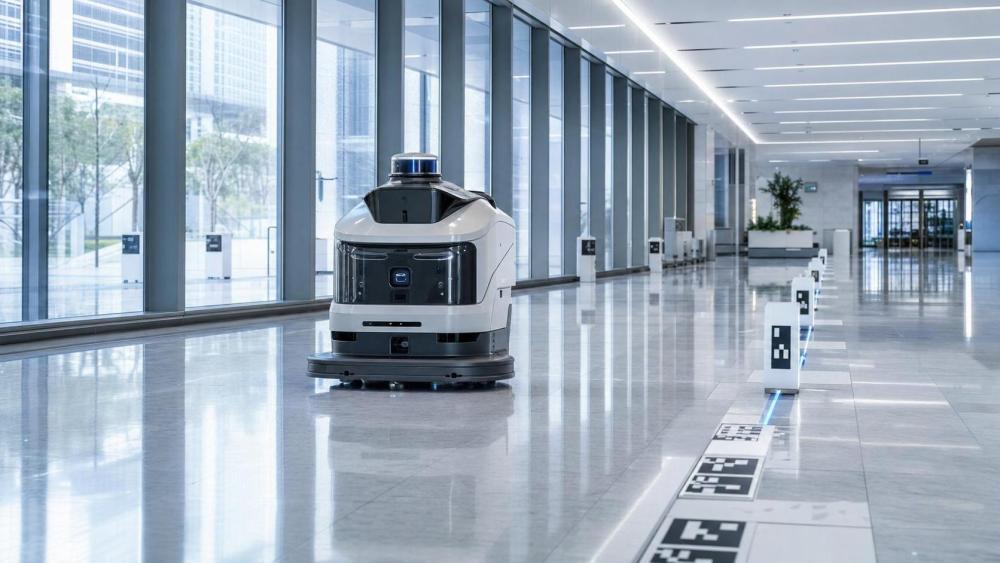
A New Compliance Reference for Commercial SLAM Performance
According to the information provided, TUV Rheinland issued the world's first SLAM performance benchmark guideline specifically for autonomous cleaning robots on July 9, 2026.
The guideline states that in typical commercial scenarios such as glass curtain walls, moving crowds, and interference from multiple light sources, a positioning error above +/-2.3 cm is regarded as not meeting the requirements for high-risk machinery under CE Annex IV.
The same information states that this guideline has been incorporated into the draft of DIN SPEC 33457 in Germany and is set to become a basis for mandatory CE assessment in 2027.
Where the Immediate Pressure May Appear
For robot manufacturers, the issue moves into validation and certification preparation
From an industry perspective, autonomous cleaning robot manufacturers are likely to feel the most direct impact because the disclosed threshold is tied to whether performance in commercial environments can satisfy a high-risk machinery requirement. The business link most exposed is product testing, technical documentation, and pre-certification validation for scenarios where reflective surfaces, foot traffic, and lighting variation can affect positioning stability.
What deserves closer attention is whether existing product claims and internal test methods are aligned with the newly stated +/-2.3 cm baseline in those specific environments, rather than only under controlled conditions.
For component and supply-chain partners, scenario consistency becomes more important
Analysis shows that suppliers supporting sensing, navigation, integration, or delivery for autonomous cleaning robots may also be affected, because a stricter performance reference can influence how upstream capabilities are evaluated during procurement and acceptance. The impact is likely to appear in specification alignment, delivery verification, and communication around performance boundaries in commercial sites.
These companies should pay attention to whether customers begin requesting more scenario-based evidence tied to glass-heavy spaces, moving pedestrian flows, and complex lighting conditions.
For buyers and commercial users, procurement risk may shift toward compliance-readiness
Observably, buyers, facility operators, and commercial end users may need to look beyond cleaning efficiency alone. If CE assessment in 2027 will rely on this benchmark, procurement reviews may increasingly focus on whether a robot can demonstrate stable positioning under the commercial conditions named in the guideline.
The practical effect may show up in tender language, acceptance criteria, and deployment planning, especially where operating environments are visually complex or highly dynamic.
What Companies Should Track From Now
Watch for any further official wording around the draft and assessment basis
Analysis shows that the incorporation of the guideline into the DIN SPEC 33457 draft is already a meaningful signal, but companies should distinguish between a published benchmark and the exact wording that will ultimately govern mandatory assessment in 2027. The practical priority is to keep tracking subsequent official expressions, draft updates, and related compliance interpretations.
Re-check test conditions against the named commercial scenarios
For companies already developing or selling autonomous cleaning robots, a key task is to review whether current internal testing truly covers the scenarios explicitly mentioned in the available information: glass curtain walls, moving crowds, and multi-light-source interference. The main issue is not broad product messaging, but whether test evidence is usable when customers or certification bodies ask how performance was verified under those conditions.
Prepare customer-facing documentation and supplier communication early
What deserves closer attention is the operational side of compliance preparation. Manufacturers and channel-facing teams may need clearer records on performance thresholds, scenario definitions, and supporting materials for discussions with buyers, integrators, and service partners. Upstream and downstream communication could become more sensitive if customers begin asking whether current models are already aligned with the announced benchmark.
Separate policy signaling from immediate business conclusions
It is more appropriate to understand this as a concrete regulatory signal with upcoming business implications, rather than as proof that every current product or project is immediately affected in the same way. Companies should avoid assuming either full readiness or automatic non-compliance without checking how their own products perform against the named conditions and threshold.
Why the Market Is Likely to Keep Watching This
As an editorial observation, this development suggests that SLAM accuracy for autonomous cleaning robots is being framed in a more measurable and assessment-linked way for commercial settings. That matters because the discussion is no longer limited to general navigation capability; it is being connected to a threshold that can influence CE evaluation.
At the same time, this is better understood as both an actionable short-term signal and a longer-term standardization marker. The immediate signal is that companies now have a more explicit reference point. The longer-term signal is that the benchmark has already moved into a DIN SPEC draft and is tied to a 2027 assessment basis. Further observation is still necessary because implementation details and market responses may continue to evolve.
How This Update Should Be Read Today
At this stage, the industry meaning of the update is relatively clear: commercial-environment SLAM performance for autonomous cleaning robots is being judged against a more defined compliance benchmark. For companies in manufacturing, supply, procurement, and deployment, the practical implication is to review test evidence, scenario coverage, and customer communication ahead of 2027.
It is more appropriate to understand this news as a defined regulatory and standardization signal with direct preparation value, rather than as a complete market conclusion that no longer requires verification.
Basis of This Article and What Still Needs Verification
This article is based on the user-provided news title, event date, and event summary. For developments of this kind, commonly relevant source types may include official announcements, corporate statements, industry association updates, standards body documents, and coverage from authoritative trade media.
No specific official source link was provided in the input, so the exact primary document path still needs ongoing verification. Continued attention should focus on any official updates related to the TUV Rheinland guideline, the DIN SPEC 33457 draft process, and the way the 2027 CE mandatory assessment basis is formally expressed.
Related News
- 00
0000-00
Michigan Offers Over $4 Million in Grants for Electric Garbage Truck Purchases - 00
0000-00
High-Pressure Pumps for Sewer Jetting: Matching Flow and Pressure to Pipe Size - 00
0000-00
Smart Waste Stations for Airports: Assessing Sorting Accuracy and Throughput - 00
0000-00
Changi Airport Reorders Cleaning Robots as Chinese Maker Reaches 40-Plus Markets
Weekly Insights
Stay ahead with our curated technology reports delivered every Monday.
Related Recommendations
Explore Industrial SW designed for smart manufacturing and automation. Improve efficiency, streamline operations, and support digital transformation.