
Vietnam Sets Origin, Trace Rules for AI Kiosks





Image placement plan
Place one visual near the beginning of the article to support the lead section. The image should show an AI-enabled recycling or sorting kiosk, customs documentation, or supply-chain traceability workflow related to import compliance.
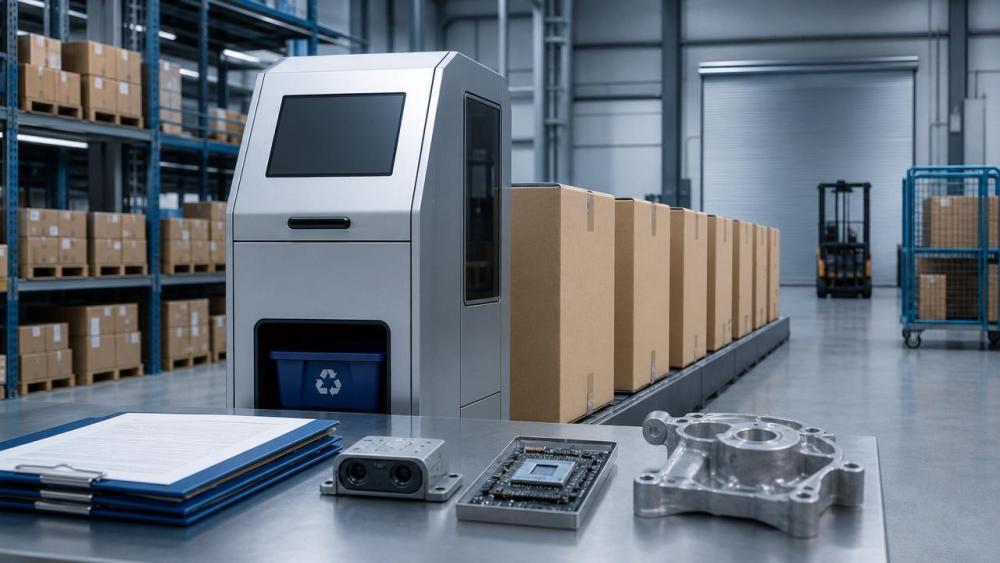
On June 1, 2026, Vietnam introduced an immediate import compliance update affecting AI Vision Sorting Kiosks, with direct implications for recycling equipment trade, component sourcing, manufacturing documentation, and customs clearance because importers must now submit both origin certification from China and a full-chain supply-chain traceability statement.
Confirmed update from Vietnam's trade authority
The Vietnam Ministry of Industry and Trade, known as MOIT, urgently updated Circular No. 22/2026/TT-BCT on June 1, 2026.
According to the provided event summary, from that date onward, all imported AI Vision Sorting Kiosks must be accompanied by a certificate of origin issued by China Customs or the China Council for the Promotion of International Trade. The acceptable documents are Form E or a non-preferential certificate of origin.
Importers must also submit a stamped full-chain supply-chain traceability statement. The statement must cover three tiers of information: sensor module suppliers, AI algorithm SDK suppliers, and structural casting foundries.
The provided summary further states that shipments failing to meet these requirements will be returned by Ho Chi Minh City Customs.
How the rule may affect industry participants
Import and export trading companies
Direct trade companies are likely to be affected because customs clearance now depends not only on commercial documents and product identification, but also on China-origin certification and a stamped traceability statement. The affected business links include document preparation, shipment booking, customs declaration, and customer delivery commitments.
From an industry perspective, traders may need to pay closer attention to whether the certificate of origin is issued by the stated authority and whether the supply-chain statement contains the required three-tier information before cargo is dispatched.
Component and material procurement teams
Procurement companies and sourcing teams may face stronger documentation pressure because the traceability statement must identify sensor module suppliers, AI algorithm SDK suppliers, and structural casting foundries. This requirement connects procurement records directly with import compliance.
Analysis shows that supplier selection, purchase order files, and origin-related records may become more important in the pre-shipment stage. Buyers may need to verify whether suppliers can provide complete and consistent information before components are integrated into finished kiosks.
Equipment manufacturers and assemblers
Manufacturers of AI Vision Sorting Kiosks may be affected because the rule links finished-equipment imports with upstream technical and production sources. The affected processes may include bill-of-materials control, supplier qualification review, production documentation, and export file preparation.
It is more appropriate to understand this as a compliance documentation issue rather than only a customs paperwork issue. If upstream information is incomplete, manufacturers may face difficulty supporting their import partners in Vietnam.
Supply-chain service providers
Freight forwarders, customs brokers, compliance consultants, and documentation service providers may need to adjust their operating checklists because shipments that lack the required documents may be returned by Ho Chi Minh City Customs.
What deserves closer attention is the coordination between certificate issuance, traceability statement preparation, document stamping, and shipment timing. Service providers may need to help clients identify document gaps before arrival at the destination port.
Compliance points companies should review now
Match the origin certificate to the shipment
Companies involved in shipments to Vietnam should check whether each AI Vision Sorting Kiosk shipment is supported by either Form E or a non-preferential certificate of origin issued by China Customs or the China Council for the Promotion of International Trade. The certificate should be reviewed before customs submission to reduce the risk of rejection.
Build the three-tier traceability file before export
The traceability statement should be prepared around the three required tiers: sensor module suppliers, AI algorithm SDK suppliers, and structural casting foundries. Because the statement must be stamped, companies should define internal responsibility for collecting, checking, approving, and retaining this information.
Align technical and commercial documents
For tenders, quotations, export contracts, and technical specifications involving AI Vision Sorting Kiosks, companies may need to ensure that the product description, supplier information, and import documents are consistent. Inconsistent wording across technical files and customs documents could create additional review questions.
Reassess delivery schedules and customs risk
Because non-compliant shipments may be returned by Ho Chi Minh City Customs, importers and exporters should review lead times for certificate issuance, supplier confirmation, document stamping, and pre-clearance checks. Procurement plans and delivery commitments may need to include additional time for compliance verification.
Industry reading: traceability becomes part of market access
Analysis shows that the update may raise the practical compliance threshold for AI-enabled recycling and sorting equipment entering Vietnam. The confirmed requirement is document-based, but its operational impact may extend into supplier management, software sourcing, and structural component traceability.
From an industry perspective, the inclusion of AI algorithm SDK suppliers is notable because it brings software-related sourcing into the same traceability framework as hardware and structural parts. This may encourage manufacturers to maintain clearer records for technology suppliers, even when the final traded product is a physical kiosk.
Observably, the rule may also shift compliance work earlier in the supply chain. Instead of preparing documents only at the customs declaration stage, companies may need to confirm traceability information when selecting suppliers, negotiating purchase terms, and compiling export files.
It is more appropriate to understand the update as a potential signal of stricter import documentation discipline for intelligent recycling equipment. However, the actual impact will depend on how customs authorities interpret and enforce the requirement in practice.
Conclusion: a documentation change with operational consequences
The June 1, 2026 update creates a clear import requirement for AI Vision Sorting Kiosks entering Vietnam: origin certification from China and a stamped full-chain supply-chain traceability statement are now central to customs acceptance.
For companies in trade, procurement, manufacturing, and logistics, the rational response is to strengthen document control and supplier data collection without overstating the outcome. The rule does not, based on the provided information, establish market data, product quotas, or company-specific restrictions, but it does make compliance readiness more important for cross-border delivery.
Source note and items to monitor
This article is based on the provided news title, event date, and event summary concerning the June 1, 2026 update by MOIT to Circular No. 22/2026/TT-BCT.
Relevant source types for continued verification may include official notices from MOIT, customs guidance from Vietnam, certificate-of-origin issuance procedures from China Customs or the China Council for the Promotion of International Trade, and compliance instructions used by customs brokers.
Specific official source links were not provided in the input and should be verified continuously. Further monitoring is needed for detailed implementation guidance, certification review practices, tender document changes, customs interpretation, and industry feedback.
Related News
- 00
0000-00
Commercial Floor Care Equipment Buying Guide: Scrubbers, Sweepers, and Cost per Cleaned Square Foot - 00
0000-00
Smart Waste Management Systems for Hospitals: Reducing Overflow, Infection Risk, and Labor Waste - 00
0000-00
Pressure Washers for Heavy Duty Cleaning: Hot vs Cold Water, PSI, GPM, and Job Fit - 00
0000-00
Electric Floor Scrubbers OEM Checklist: Battery Options, Tank Sizes, Controls, and Branding
Weekly Insights
Stay ahead with our curated technology reports delivered every Monday.
Related Recommendations
Explore Industrial SW designed for smart manufacturing and automation. Improve efficiency, streamline operations, and support digital transformation.