
Vietnam Requires Chinese Origin Proof for AI Recycling Stations





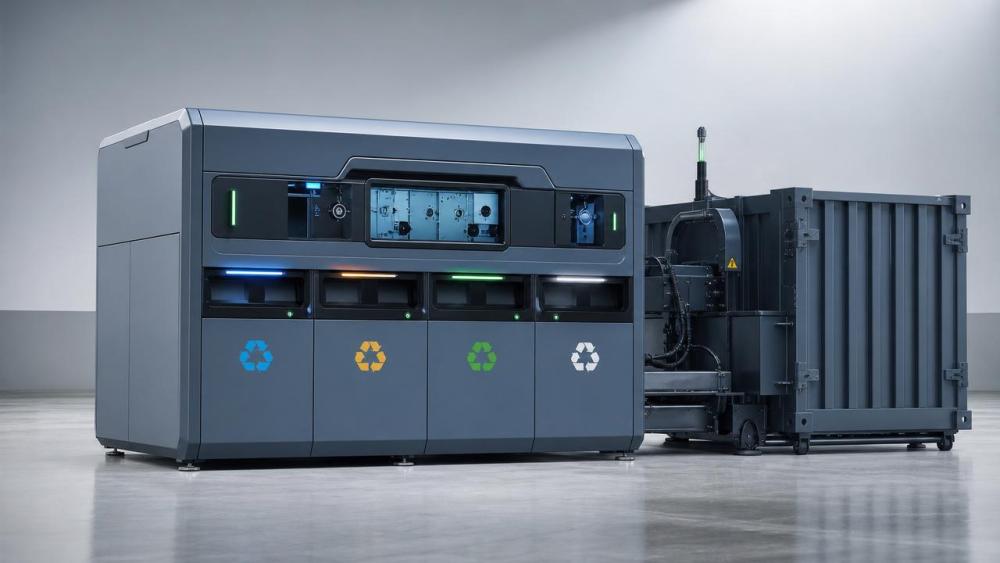
Vietnam’s Ministry of Industry and Trade implemented a new regulation on June 1, 2026, mandating that all imported commercial AI-powered sorting and recycling stations—including AI kiosks, multispectral recognition modules, and compaction units—must be accompanied by a Certificate of Origin issued by the China Council for the Promotion of International Trade (CCPIT), plus a manufacturer-issued supply chain traceability statement covering chip, image sensor, and AI module suppliers (including names and countries of origin). This measure targets enhanced scrutiny of green technology imports and directly affects exporters, OEMs, logistics providers, and compliance officers in the environmental tech and AI hardware sectors.
Event Overview
On June 1, 2026, Vietnam’s Ministry of Industry and Trade (MOIT) enacted Circular No. 22/2026/TT-BCT. The circular stipulates that effective immediately, commercial AI visual sorting and recycling stations imported into Vietnam must include: (i) a CCPIT-issued Certificate of Origin certifying Chinese origin; and (ii) a supply chain traceability declaration signed by the manufacturer, listing the names and countries of origin for tier-1 suppliers of AI chips, image sensors, and AI processing modules. The stated objective is to strengthen oversight of imported green technologies.
Industries Affected
Exporters and OEMs Based in China
Manufacturers exporting AI-enabled recycling hardware from China to Vietnam are now required to secure formal CCPIT certification and prepare granular supplier-level documentation. Impact arises not only from administrative burden but also from potential delays if upstream component suppliers—especially those outside China—cannot reliably provide verifiable country-of-origin data for their subcomponents.
Component Suppliers (Chips, Sensors, AI Modules)
Tier-2 and tier-3 suppliers providing critical components—including semiconductor vendors, CMOS sensor makers, and embedded AI module integrators—may face increased due diligence requests from their downstream OEM customers. Their ability to disclose precise national affiliations of sub-tier suppliers (e.g., foundry locations, packaging facilities) may now influence order eligibility for Vietnam-bound shipments.
International Trading and Logistics Firms
Freight forwarders and customs brokers handling AI recycling equipment shipments to Vietnam must now verify document completeness prior to filing. Missing or non-compliant origin certificates or incomplete traceability statements will likely trigger import holds or rejections at Vietnamese ports—raising demurrage risk and operational friction.
Supply Chain Compliance and Certification Service Providers
Firms offering origin certification support, supply chain mapping, or regulatory documentation services may see rising demand—particularly for bilingual (Chinese–English–Vietnamese) technical documentation review and CCPIT coordination. However, service scope is constrained strictly to supporting the two mandated documents; no broader certification regime is introduced under this circular.
Key Considerations and Recommended Actions
Monitor official guidance from Vietnam’s General Department of Vietnam Customs and MOIT
The circular references implementation details to be clarified via subsequent notices. Companies should track updates on acceptable formats for the traceability statement, validity periods for origin certificates, and whether retroactive application applies to pending shipments cleared before June 1, 2026.
Identify and validate origin status for all three mandated component tiers
Manufacturers must audit current bills of materials to confirm whether chips, image sensors, and AI modules—and their underlying subcomponents—are sourced from China or elsewhere. Non-Chinese origin for any of these three elements may disqualify the shipment from meeting the origin requirement, regardless of final assembly location.
Distinguish between policy signal and enforceable requirement
This circular applies exclusively to commercial AI sorting and recycling stations as defined—not to general-purpose AI hardware, industrial robots, or non-AI recycling machinery. Companies should avoid overgeneralizing its scope when assessing internal compliance impact.
Prepare documentation workflows ahead of shipment scheduling
CCPIT certification requires lead time; concurrent preparation of the traceability statement—including supplier verification and bilingual signing—should be integrated into pre-shipment checklists. Delays in either document may halt customs clearance, making early alignment with procurement and quality teams essential.
Editorial Observation / Industry Perspective
Observably, this regulation functions primarily as a procedural tightening rather than a market access restriction—at least for now. It does not ban imports, impose tariffs, or mandate local content. Instead, it introduces documentation rigor focused specifically on transparency in AI hardware provenance. Analysis shows the emphasis on Chinese origin—rather than ‘Made in China’—suggests Vietnam is prioritizing traceability of technology lineage over manufacturing geography alone. From an industry perspective, this appears less like a trade barrier and more like an early-stage governance framework for high-impact green tech imports. Continued attention is warranted, especially if similar requirements emerge for other ASEAN markets or expand to cover additional AI hardware categories.
In summary, Vietnam’s new documentation requirement reflects a growing global trend toward supply chain transparency in climate-critical technologies. Its immediate effect is administrative, not prohibitive—but its long-term significance lies in signaling how sustainability-linked hardware may be increasingly governed through origin and traceability levers. Currently, it is best understood as a targeted compliance checkpoint, not a structural shift in market access conditions.
Source: Vietnam Ministry of Industry and Trade (MOIT), Circular No. 22/2026/TT-BCT, effective June 1, 2026. Note: Implementation guidance, enforcement timelines for pending consignments, and potential amendments remain subject to ongoing observation.
Related News
- 00
0000-00
Michigan Offers Over $4 Million in Grants for Electric Garbage Truck Purchases - 00
0000-00
High-Pressure Pumps for Sewer Jetting: Matching Flow and Pressure to Pipe Size - 00
0000-00
Smart Waste Stations for Airports: Assessing Sorting Accuracy and Throughput - 00
0000-00
Changi Airport Reorders Cleaning Robots as Chinese Maker Reaches 40-Plus Markets
Weekly Insights
Stay ahead with our curated technology reports delivered every Monday.
Related Recommendations
Explore Industrial SW designed for smart manufacturing and automation. Improve efficiency, streamline operations, and support digital transformation.