
Saudi SASO Tightens Drain Auger Test Rules





On June 30, 2026, SASO released a revised version of SASO IEC 62841-2-5:2026 for Electric Drain Augers, adding mandatory IP68 and IK10 protection requirements and introducing a combined durability test under sand dust and high humidity conditions. With the revised standard set to become mandatory on October 1, 2026, the change is relevant not only for product compliance teams, but also for exporters, testing providers, procurement planners, and delivery operations linked to shipments into the Middle East market.
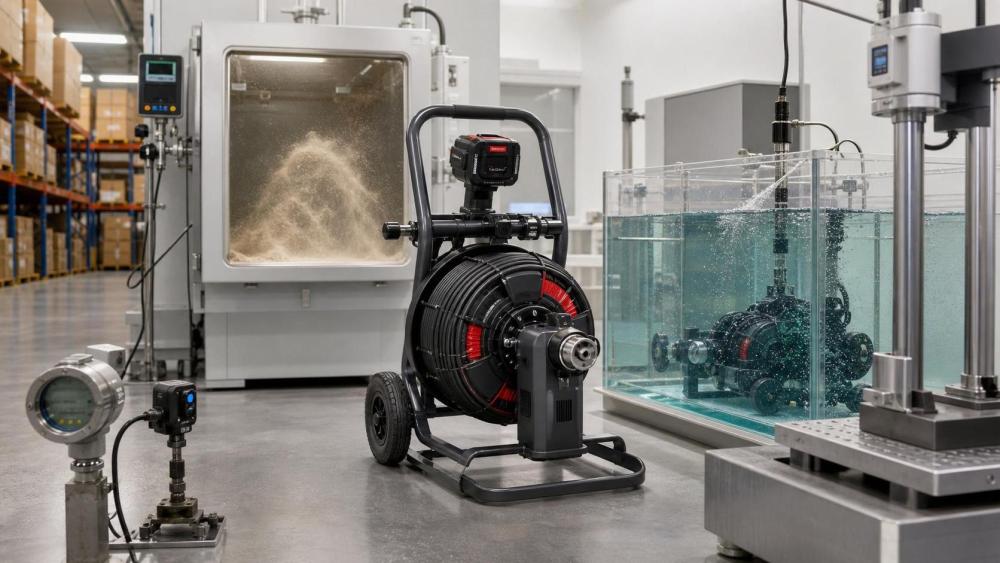
What the revised standard now requires
The confirmed update is that SASO issued the revised SASO IEC 62841-2-5:2026 on June 30, 2026 for Electric Drain Augers. According to the provided summary, the revision adds mandatory dual protection requirements of IP68 and IK10.
The same revision also requires all models to pass a combined aging test consisting of 120 continuous hours of sand dust exposure under ISO 10528 Class 4 conditions together with an 85%RH high-humidity cycling test.
The standard is scheduled for mandatory enforcement on October 1, 2026. The provided information also states that the change affects more than 90% of China’s Electric Drain Augers exports to the Middle East market.
Where the pressure is likely to appear first
Export orders may face tighter pre-shipment screening
From an industry perspective, exporters are likely to be among the first affected because the rule change is tied directly to mandatory technical requirements. The main impact may appear in model qualification, shipment readiness, and document preparation. What deserves closer attention is whether existing product files, test reports, and technical descriptions can still support market entry once the October 1 enforcement date arrives.
Manufacturing teams may need to reassess model readiness
Analysis shows that manufacturers of Electric Drain Augers may need to review whether current models can meet the newly stated IP68 and IK10 requirements together with the combined 120-hour sand dust and high-humidity aging test. The practical pressure point is not only design compliance, but also whether verification work can be completed in time for products intended for near-term delivery.
Testing and certification workflows may become a scheduling issue
Observably, testing service providers and certification-related companies may face increased demand because the revised standard introduces a more explicit durability threshold. The business impact may be felt in test scheduling, report issuance, and coordination around technical evidence. Companies involved in certification support should pay close attention to how clients organize sample testing, document updates, and compliance review before shipment.
Procurement and channel planning may need adjustment
For buyers, distributors, and supply chain service providers, the issue is less about the text of the standard itself and more about execution timing. It is more appropriate to understand this as a change that may affect supplier qualification checks, order confirmation timing, and delivery planning for models intended for the affected market. Procurement teams may need to verify whether suppliers can provide updated compliance materials aligned with the revised standard.
What companies should review now
Check the status of model-by-model compliance evidence
Companies should review whether each affected model has technical documentation and test evidence that can be aligned with the revised SASO IEC 62841-2-5:2026 requirements. Based on the provided information, the key points to watch are the mandatory IP68 and IK10 thresholds and the combined sand dust and high-humidity durability test requirement.
Watch for enforcement language and application practice
Analysis shows that the standard already has a stated mandatory date, but the provided information does not include further operational detail on enforcement practice. For that reason, companies should continue tracking how the revised requirements are reflected in compliance review language, market access procedures, and any downstream documentation expectations tied to the October 1, 2026 implementation date.
Recheck lead times in procurement and delivery plans
What deserves closer attention is whether current procurement schedules and delivery commitments leave enough time for testing, documentation updates, and shipment preparation. Where products are already in production or queued for export, companies may need to reassess the timing risk around compliance confirmation.
Prepare for after-sales and traceability questions
Observably, where a rule change raises product durability requirements, after-sales teams and quality traceability functions may also need to confirm that product records, technical files, and shipment documentation remain consistent. This is not yet evidence of a changed enforcement outcome, but it is a practical area to monitor as the standard moves into mandatory application.
Why this looks like an execution signal, not just a technical update
From an industry perspective, this development is more than a routine standards revision because it combines explicit protection grades with a named environmental durability test and a clear mandatory date. That makes it more appropriate to understand the update as an execution signal for compliance preparation rather than as a distant or purely formal standards change.
At the same time, analysis should remain measured. The provided information confirms the rule change and enforcement date, but it does not yet provide detailed implementation guidance, market practice, or enforcement examples. That means companies still need to watch how certification interpretation, procurement specifications, and customer-side acceptance criteria evolve in practice.
How the market should read this change
The immediate significance of this update is that market access expectations for Electric Drain Augers in the affected trade flow are becoming more specific and more test-driven. For companies tied to exports, certification, procurement, and delivery, the issue is not only whether the revised standard exists, but whether business processes can adjust before the mandatory date.
Current observation suggests this should be read as a confirmed rule change with near-term compliance implications, while some execution details still require continued monitoring. A cautious reading is more appropriate than a broad conclusion about final market outcomes.
Basis of this article and what still needs verification
This article is based on the user-provided news title, event date, and event summary. For developments of this type, commonly relevant source categories may include official regulator announcements, standards organization publications, customs or trade authority information, industry association updates, certification notices, and reporting by authoritative trade media.
No specific official source link was provided in the input, so the exact official publication link still needs to be verified on an ongoing basis. Observably, the areas that still warrant follow-up include detailed enforcement wording, certification application practice, changes in tender or procurement documents, industry feedback, and how affected companies implement the revised requirements in actual export operations.
Related News
- 00
0000-00
Michigan Offers Over $4 Million in Grants for Electric Garbage Truck Purchases - 00
0000-00
High-Pressure Pumps for Sewer Jetting: Matching Flow and Pressure to Pipe Size - 00
0000-00
Smart Waste Stations for Airports: Assessing Sorting Accuracy and Throughput - 00
0000-00
Changi Airport Reorders Cleaning Robots as Chinese Maker Reaches 40-Plus Markets
Weekly Insights
Stay ahead with our curated technology reports delivered every Monday.
Related Recommendations
Explore Industrial SW designed for smart manufacturing and automation. Improve efficiency, streamline operations, and support digital transformation.