
CSSOPE 2026 Summit Launches Green Municipal Equipment Procurement Zone





The CSSOPE 2026 International Summit opened on 2 July 2026 in Shanghai, marking a strategic expansion of global procurement channels for low-carbon municipal and sanitation equipment — driven by tightening international sustainability mandates and evolving green public procurement criteria.
Event Overview: First-Ever Dedicated Zone for Green Municipal Equipment
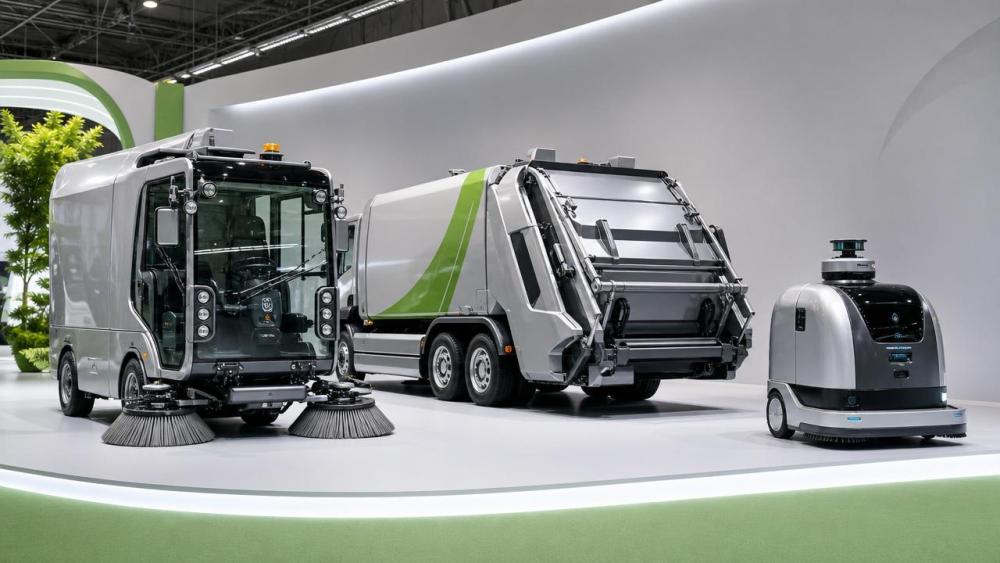
The 16th CSSOPE International Petroleum & Chemical Equipment Procurement Summit and Exhibition took place in Shanghai from 2–3 July 2026. For the first time, the event featured a dedicated ‘Green Municipal & Sanitation Equipment International Procurement Zone’. Over 600 international buyers—including Saudi Aramco, Egyptian General Petroleum Corporation (EGPC), and TotalEnergies—attended, with confirmed procurement interest in electric street sweepers (EV Street Sweepers), rear-loader garbage trucks (Rear Loader Garbage Trucks), autonomous cleaning robots (Autonomous Cleaning Robots), and related intelligent terminal devices. On-site pre-matching sessions and sample inspection channels were made available to facilitate rapid technical and commercial alignment.
Impact Across Industry Roles
Direct Exporters and Trading Enterprises
These enterprises face intensified demand for certified low-emission equipment aligned with international environmental compliance frameworks (e.g., EU Ecodesign, UNECE R134). The procurement zone signals a shift toward performance-based tendering — where verified energy efficiency, battery lifecycle data, and interoperability with smart city platforms are now decisive bid criteria.
Raw Material and Component Suppliers
Suppliers of lithium-ion battery systems, regenerative braking components, and corrosion-resistant chassis alloys must prepare for accelerated validation timelines. Buyers are increasingly requesting third-party test reports (e.g., ISO 14040 LCA summaries, UN ECE R100 certification) alongside standard material declarations.
Equipment Manufacturers and System Integrators
Manufacturers must ensure traceability across subsystems — especially for autonomous navigation modules and telematics hardware — to meet functional safety expectations (e.g., ISO 26262 ASIL-B relevance for onboard AI logic). Pre-certification of software update protocols is emerging as a de facto requirement during pre-matching.
Logistics and Aftermarket Service Providers
With orders spanning multiple Middle Eastern and North African markets, service network readiness — including localized spare parts inventory, bilingual technical documentation (EN/AR/FR), and remote diagnostics capability — is now evaluated during supplier qualification, not post-award.
Key Priorities for Participating Companies
Validate Certification Alignment Early
Confirm applicability of CE marking (for EU-bound units), GCC Type Approval, and Saudi SASO IECEE CB Scheme acceptance — particularly for EV drivetrain and battery management systems. Note that some buyers require on-site factory audits prior to sample verification.
Prepare Technical Documentation for Pre-Matching
Submit comprehensive technical dossiers — including EN 15647-compliant noise emission reports, IP67-rated enclosure test certificates, and cybersecurity architecture summaries — ahead of the summit to qualify for priority pre-matching slots.
Align Production Capacity with Shortened Procurement Cycles
International buyers are shifting toward just-in-time delivery models tied to municipal budget cycles. Manufacturers should review lead times for battery cell sourcing, controller firmware validation, and final system integration to avoid delays in order confirmation.
Strengthen Traceability and Warranty Frameworks
End-to-end digital traceability (from raw material lot IDs to firmware version logs) and extended warranty terms covering battery degradation (≥80% capacity retention over 5 years) are becoming standard negotiation points during sample evaluation.
Industry Observation: A Structural Shift in Public Sector Procurement
Analysis shows this procurement zone reflects more than tactical demand — it signals institutionalization of life-cycle environmental criteria in public infrastructure tenders. From an industry perspective, what deserves closer attention is the convergence of three trends: (1) mandatory carbon footprint disclosure requirements for municipal fleets in Gulf Cooperation Council (GCC) countries; (2) increasing linkage between equipment procurement and national smart city interoperability standards (e.g., Singapore’s Smart Nation Platform APIs); and (3) stricter enforcement of after-sales service localization — including minimum local technician certification quotas. It is more appropriate to understand this as a step toward harmonized green public procurement rules across oil-producing economies, rather than a one-off trade promotion initiative.
Strategic Significance for the Global Sanitation Equipment Value Chain
This event underscores a broader realignment: municipal sanitation is no longer treated as a low-tech procurement category but as a critical node in national decarbonization and digital infrastructure strategies. For manufacturers, success hinges less on cost competitiveness alone and more on verifiable compliance agility, modular design adaptability, and embedded service readiness. The summit does not guarantee immediate contracts — but it does accelerate market access for suppliers who treat regulatory foresight as core R&D infrastructure.
Source Information and Ongoing Monitoring
This article was generated based solely on the provided title, event date (2 July 2026), and summary description. Specific official source links were not provided in the input and should be verified continuously. Stakeholders are advised to monitor upcoming updates on procurement guidelines issued by participating entities (e.g., Saudi Aramco’s updated Vendor Technical Requirements, EGPC’s 2026 Municipal Fleet Electrification Roadmap), as well as forthcoming revisions to ISO/IEC 8100-1 (Smart City Infrastructure Standards) and regional battery recycling mandates under development in the GCC and MENA regions.
Related News
- 00
0000-00
Michigan Offers Over $4 Million in Grants for Electric Garbage Truck Purchases - 00
0000-00
High-Pressure Pumps for Sewer Jetting: Matching Flow and Pressure to Pipe Size - 00
0000-00
Smart Waste Stations for Airports: Assessing Sorting Accuracy and Throughput - 00
0000-00
Changi Airport Reorders Cleaning Robots as Chinese Maker Reaches 40-Plus Markets
Weekly Insights
Stay ahead with our curated technology reports delivered every Monday.
Related Recommendations
Explore Industrial SW designed for smart manufacturing and automation. Improve efficiency, streamline operations, and support digital transformation.